Old Masters Reproductions
It was quite fun painting these minature reproduction portraits. For anyone interested in their art history or similar old portraits, these little minatures can still make a big talking point when on display. Ideal for those smaller areas of the home or office to display.
These portraits below measure no more than 12 cm in height!
(illustrated with AI frames)
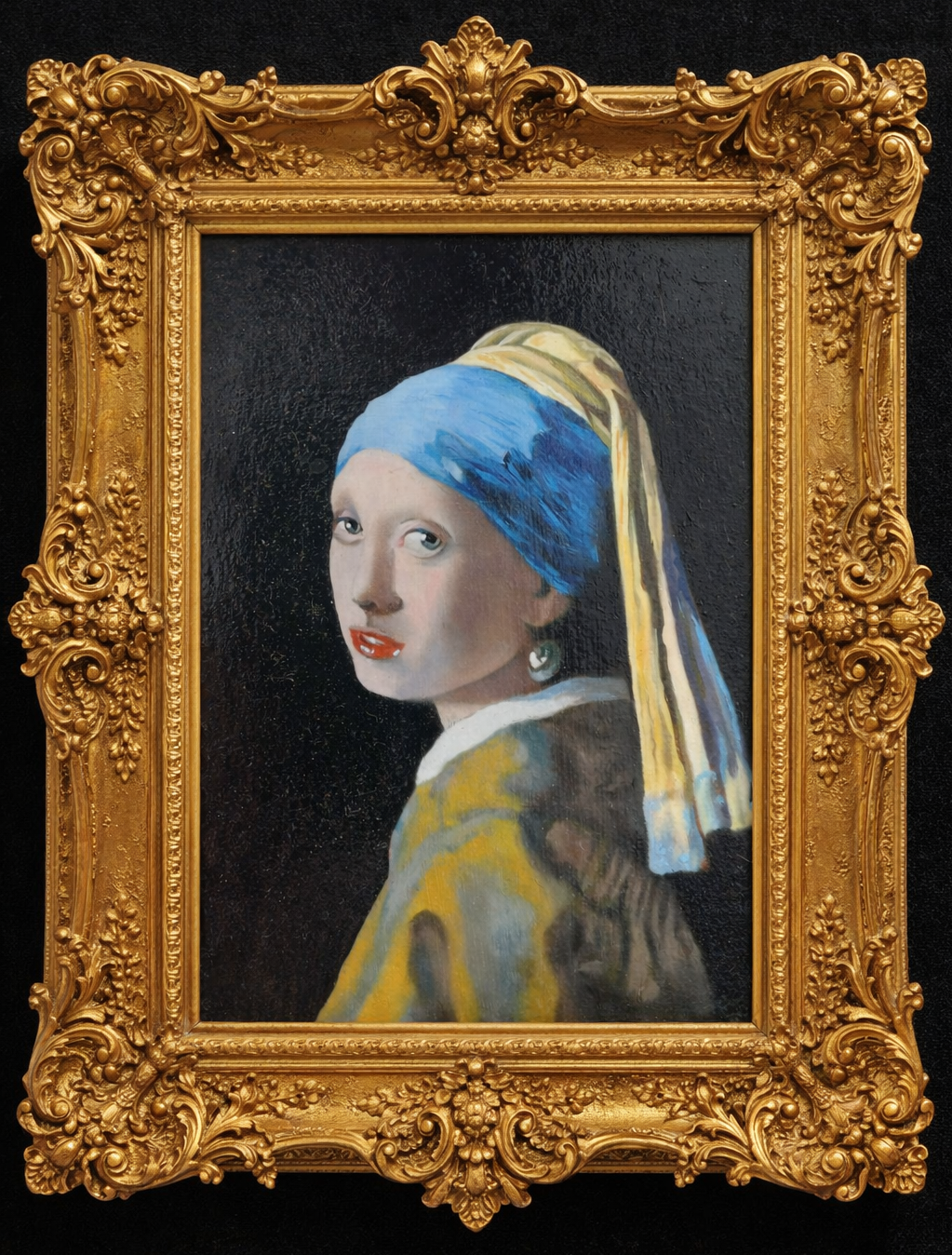
Girl with a Pearl Earring (c. 1665) by Johannes Vermeer is a small yet striking tronie—a study of expression rather than a formal portrait—showing a young woman turning toward the viewer with parted lips and a luminous pearl earring catching the light. Set against a dark background, her blue‑and‑yellow turban and soft, subtly modelled features create an intimate sense of immediacy, making the painting feel alive and mysterious. Vermeer’s masterful control of light and restrained detail gives the work its enduring power, transforming a simple head‑turn into one of the most iconic images in Western art.
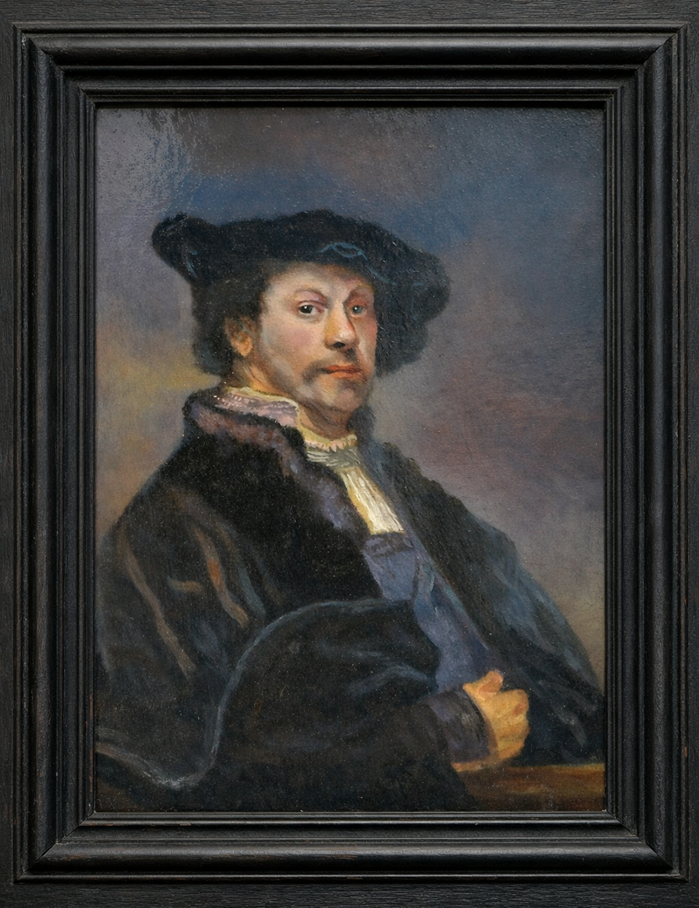
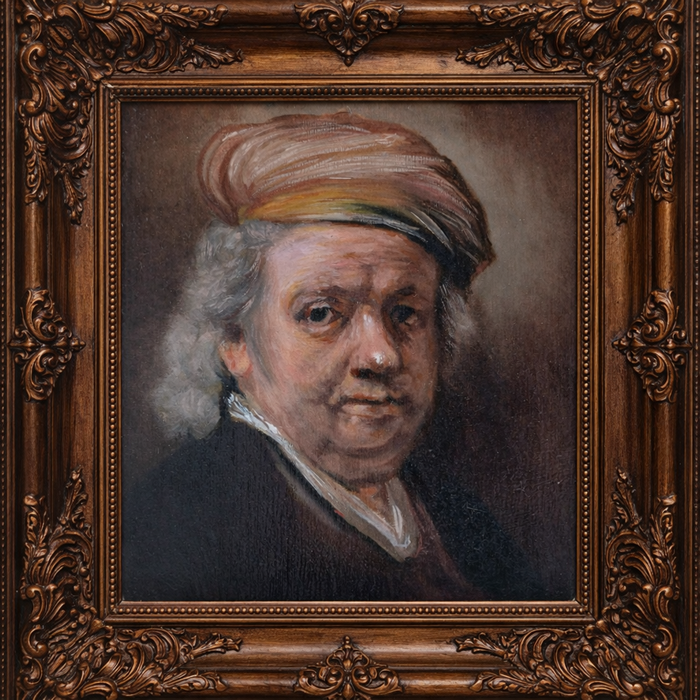
Rembrandt’s self‑portraits (above and below) form an extraordinary visual autobiography, charting his life from confident young prodigy to weathered, introspective master. Across more than forty paintings, he experiments boldly with light, texture and expression, often presenting himself with unflinching honesty—creased skin, tired eyes, and the quiet resilience of experience. These works aren’t just likenesses; they’re meditations on ageing, identity and the act of painting itself, revealing a mind continually probing what it means to be human.
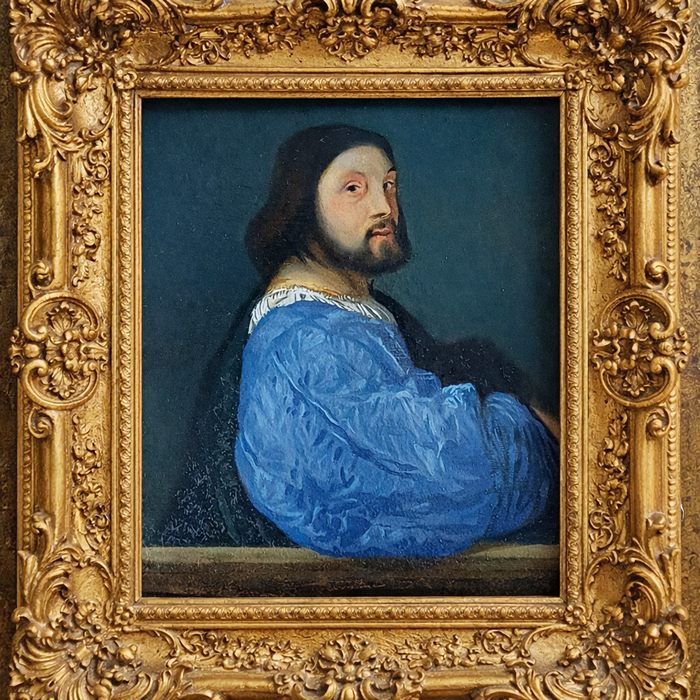
Titian’s A Man with a Quilted Sleeve (c. 1510) is one of his earliest and most influential portraits, capturing a Venetian gentleman—now thought to be Gerolamo Barbarigo—caught in a dynamic turning pose that momentarily meets the viewer’s gaze. The painting’s most striking feature is the voluminous quilted satin sleeve, which projects over the parapet into our space, a bold compositional move that gives the sitter an almost physical presence. Its now‑blue colour was originally a purple mixture of red lake and blue pigments, but the red has faded over time, leaving the brilliant blue we see today. Titian’s subtle merging of shadowed forms with a soft grey background, along with the sitter’s ambiguous raised eyebrow, creates an atmosphere of mystery and psychological depth that helped shape the future of European portraiture.